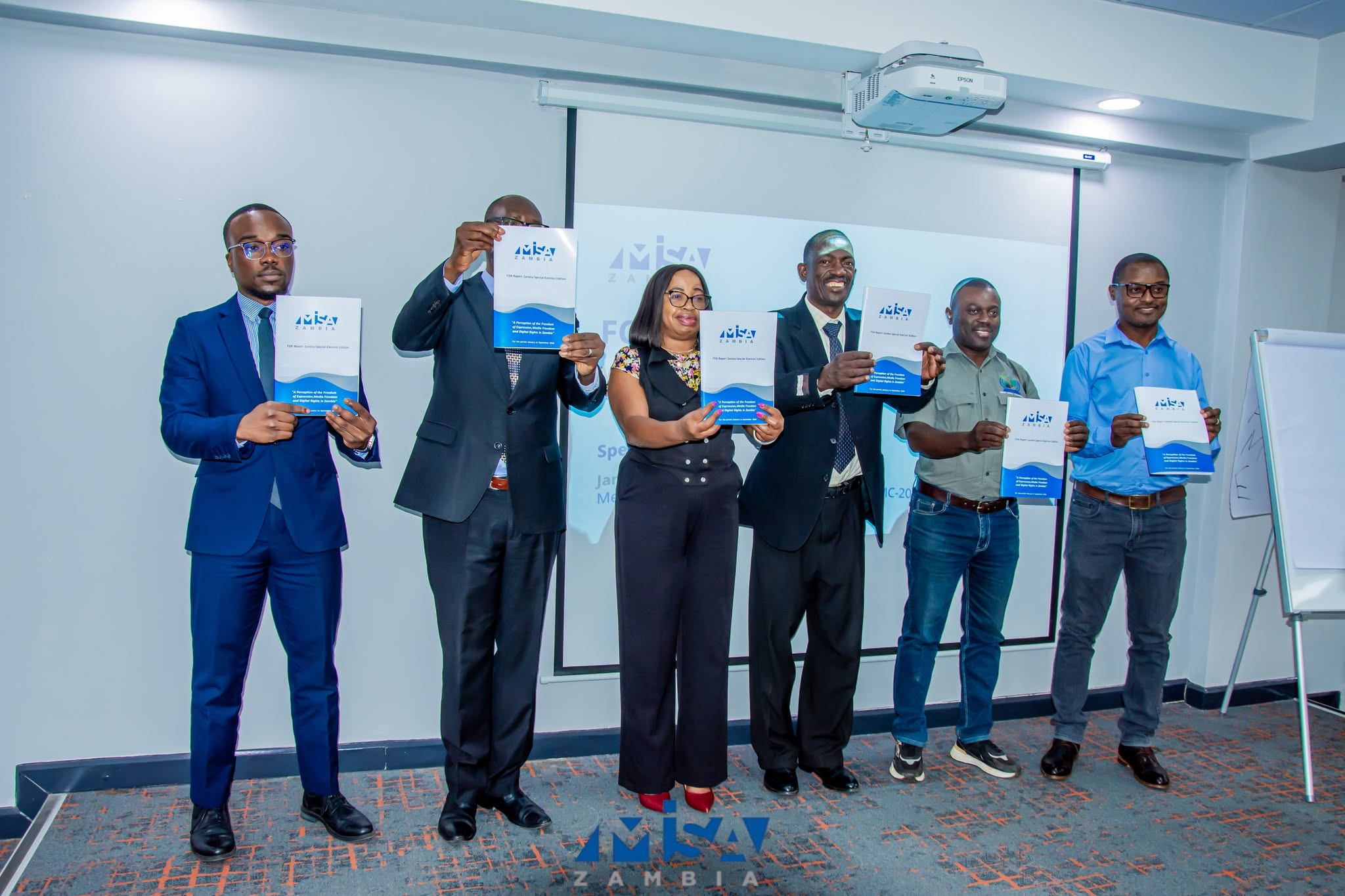
The Media Institute of Southern Africa (MISA) Zambia has launched its Freedom of Expression (FOX) Report for January to September 2026. The report assesses freedom of expression, media freedom, access to information and digital rights in Zambia.
Speaking at the launch, MISA Zambia Chairperson Mrs. Lorriane Mwanza Chisanga, represented by Treasurer General Ms. Linda Siwingwa, said the report gives an important picture of how journalists and other stakeholders see the environment in which they work. She said it records the views, concerns and experiences of those who took part in the research, and helps the sector understand how the environment is experienced.
The launch drew government, media organisations, civil society and other stakeholders. Director of Press and Media Development Mr. Morden Mayembe, representing Permanent Secretary Mr. Thabo Kawana, took part in the discussion. He said the findings should be read within Zambia’s legal framework. He urged journalists to learn the Access to Information (ATI) Act and follow its procedures when requesting public information.
“A journalist cannot do that which others are not permitted to do,” Mr. Mayembe said.
Research consultant Mr. Felix Chiteule presented the findings, which show that political interference, harassment, restrictive laws and economic pressure shape the media environment. Of the 160 journalists who took part, 89 (55.6%) named political interference as a factor affecting media freedom. Eighty cited harassment and intimidation, and 75 cited restrictive laws. In addition, 71 (44.4%) practise self-censorship because of fear, 52 (32.5%) reported being denied information, and 28 reported pressure to change a story.
The report recommends a rapid response mechanism for journalists, providing legal advice, safety referrals and digital security support. MISA Zambia and other media bodies would deliver it with legal, safety and digital-security partners.
MISA Zambia National Director Mr. Austin Kayanda said the report gives all stakeholders a shared basis for action. He urged them to engage with the findings constructively. He said the report should do more than identify areas of concern. It should strengthen collaboration, improve policy and practice, and support an environment where journalists and citizens express their rights freely without fear.
Mr. Kayanda called on government, media organisations, civil society and other stakeholders to keep the dialogue going. He said the commitments made at the launch, especially on access to information, must continue beyond the launch and become meaningful action.
“This report is a starting point. MISA Zambia will keep working with partners to turn these findings into results for journalists and citizens,” he said.